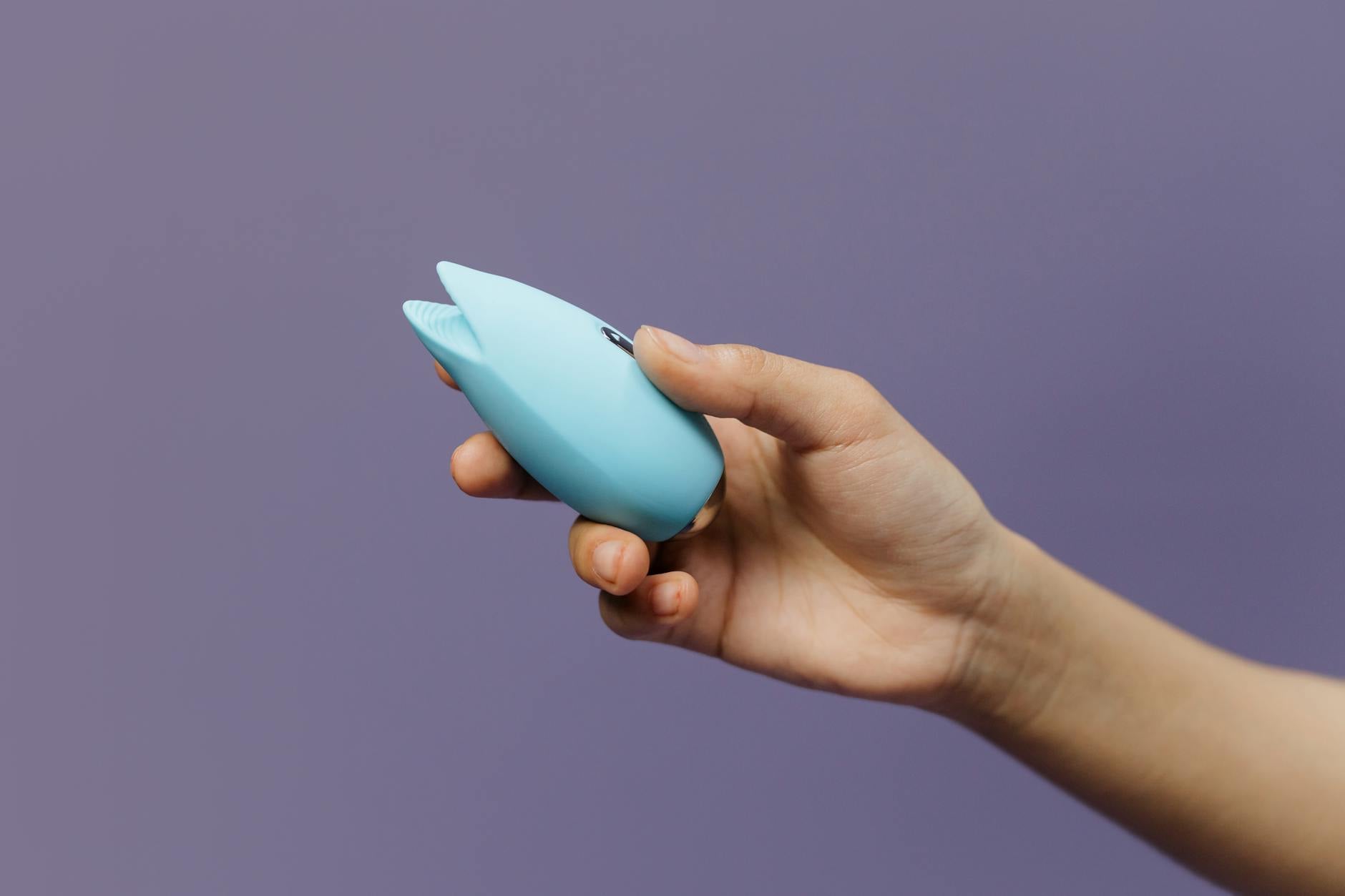
The speed trap nobody talks about
Here's the thing about vibrators: most people use them like they're racing against the clock. Pattern on high, go straight for the finish. It works. But it misses something bigger.
A lemon vibrator (or any clitoral vibrator) becomes infinitely more satisfying when you flip the script and treat arousal like something to explore rather than solve. Slow, intentional pleasure isn't just more relaxing. It actually changes what's possible neurologically, emotionally, and physically.
Why slow arousal hits different
When you rush through the early stages of arousal, you're working against your own biology. Your nervous system has a preference for gradual activation. The clitoris has about 8,000 nerve endings, and they don't all light up at once. They respond to sustained, varied stimulation over time.
Here's the neurological part that matters: slow arousal gives your brain time to sync with your body. Dopamine (the wanting chemical) builds gradually, then a flood of oxytocin (the bonding chemical) comes when you finally release. When you skip the slow part, you get intensity without depth. You orgasm, sure, but the experience itself feels thinner.
There's also a practical advantage: extended arousal often leads to stronger orgasms. Not because you're trying harder, but because your pelvic floor has time to coordinate, your respiratory system has time to sync, and the vascular response deepens. Your body becomes more resourced.
The setup: time, space, and intention
Slow arousal requires you to actually commit to it. That means:
Block time. Tell yourself you have 30 to 45 minutes. Not because you need that long to climax, but because you're giving yourself permission to wander. This alone changes the experience. The moment you set a deadline for orgasm, you've activated performance anxiety.
Turn off notifications. Phone across the room. If you live with a partner, communicate beforehand: "I'm taking some time for myself." No mystery, no interruption.
Temperature matters. A cool room with good air circulation. Arousal already raises your core temperature, and overheating breaks the spell.
Comfort is key. Bed, couch, or cushioned floor. Somewhere you can shift positions without thinking about it.
The progression: how to actually use a lemon vibrator for slow play
Start with the device off. Touch your body first. Your outer thighs, your lower belly, your breasts. This isn't foreplay to the vibrator. This is the thing itself.
When you turn on your lemon clitoral vibrator, start at the lowest setting. Pattern 1 or 2 on most devices. Focus on the outer areas first. Your vulva has sensitivity all over, not just the clitoral head. The labia, the vestibule, the perineum. A lot of people skip these zones because they're impatient.
Stay with one pattern and one zone for 3 to 5 minutes. Let sensation settle. You're not looking for a spike in pleasure. You're looking for a slow intensification. Your arousal is rising, and you're just tracking it.
After 5 minutes, move to a different zone. Different pattern. Different intensity level. This variation is what keeps your nervous system engaged and prevents habituation (that weird numbness that happens when you stay on high too long).
The role of breath and attention
This is where most people lose the thread. They reach for the vibrator and think the vibrator is doing the work. The vibrator is just the vehicle. Your attention is the fuel.
Notice what you're feeling. Not in a clinical way. Just like: oh, that feels tingly. That spot's sensitive. I like when I move it slowly there. Simple observation.
Breathe deeper as arousal builds. Not yoga breathing. Just fuller breaths. Your arousal literally follows your respiration. When you hold your breath, you dampen sensation. When you breathe into it, you amplify it.
Extending the plateau without frustration
At some point (maybe 15 to 20 minutes in), you'll notice your body wanting to cross over into orgasm. You don't have to. You can pause the vibrator. Keep your hand there. Breathe. Let your arousal settle slightly, then build it again.
This is the plateau phase, and it's where most people feel restless. The instruction from every article on the planet is "hold off as long as possible." That's not the goal here. The goal is to notice: what happens when I slow down? What happens when I change the angle? What if I use my other hand?
A lemon sucker (which uses gentle suction instead of vibration) can be incredibly useful here if you're already familiar with it. Alternating between the vibration and suction creates completely different sensations and can extend play without monotony.
When to shift toward climax
There's no rule here. Maybe it's 25 minutes in. Maybe it's 40. But you'll notice a shift: your arousal stops expanding and starts concentrating. Your breathing gets faster involuntarily. Your pelvic floor starts contracting on its own. That's the signal that your body's ready.
That's when you can increase intensity if you want. Higher patterns. More direct contact. Or you can keep it slow and let your body take the leap. Both work.
The aftermath matters too
After climax, stay present for 2 to 3 minutes. Don't reach for your phone. Feel your heart rate. Feel the relaxation moving through your body. This isn't woo. This is integration. Your nervous system just completed a massive cycle, and giving it space to land changes how the experience settles into your body.
Why this matters in partnered sex
If you're learning this rhythm alone, it translates directly to partnered sex. You know what slow build feels like. You know how to communicate when you want to extend it. You know the difference between rushing and savoring. That's knowledge your partner desperately needs.
Common questions about slow arousal and lemon vibrators
Why does my clitoris feel numb if I slow down?
That's usually not numbness. That's your clitoris doing what it's supposed to do: resting between stimulation. Vibrators are intense, and your body actually wants micro-breaks. The moment you feel the sensation fade, pause. Move to a different area. Come back to it 30 seconds later. You're not losing sensation. You're giving your neural pathways time to reset so they stay responsive.
Can I use lemon vibrators this way if I have a hard time reaching orgasm?
Absolutely. Slow arousal actually helps with orgasmic difficulty. When you're not performance-pressured, and when you're extending the arousal phase, your body often finds its own path to release. That said, if reaching climax is genuinely difficult, read about how medication or other factors might play a role. Extended arousal alone isn't a fix for everything.
What if I get distracted or bored during slow play?
Boredom is usually anxiety disguised. Your brain is waiting for something to happen instead of tracking what's already happening. Try narrating internally: "I feel tingly here. This spot is sensitive. That pattern feels good." It sounds silly, but it keeps your attention where it needs to be. And honestly, sometimes stopping is okay too. Forced pleasure isn't pleasure.
Is there a "right" pattern on a lemon vibrator for slow arousal?
Not really. Different vulvas respond to different things. But generally, the rhythmic patterns (that pulse on and off) are better for slow play than the constant-buzz patterns. They give your nervous system something to track. Start with pattern 1 or 2 and stay there longer than you think makes sense.
How slow is slow? Can I spend an hour on arousal?
You can spend as long as feels good. Some people love a 30-minute build. Others find 15 minutes is perfect. The point isn't duration. It's intention. If you're present and exploring for 15 minutes, that's infinitely better than zoning out for 45.
Does slow arousal work with a partner?
Yes, but it requires different communication. "I want to slow down and explore" is a whole different conversation than "Can we have sex?" Many couples discover that they've been rushing their entire intimate life because nobody ever suggested an alternative. If you're partnered, you might read about how to use a lemon vibrator with sensate focus for deeper intimacy to learn how to bring this into shared space.
The bigger picture
Slow arousal isn't about being "spiritual" or "mindful" in some Instagram-y way. It's about the fact that your pleasure is more interesting when you're actually paying attention. A lemon clitoral vibrator becomes less of a shortcut to orgasm and more of an instrument for exploring what your body actually enjoys.
Once you've learned this rhythm, you don't have to do it every time. Some days you want quick, intense release. That's fine. But knowing you can go slow, knowing what that feels like, changes your relationship to your own sexuality. You're no longer at the mercy of speed. You're in control of the experience.
If you're curious about other ways to deepen your practice, take a look at how to choose between suction and vibration to understand how different stimulation types can extend play even further. Or, if you're navigating slower arousal alongside a partner with shifting interest, explore how to use a lemon vibrator when libido shifts in long-term relationships.
Your pleasure doesn't have to be rushed. It shouldn't be. Start slow, stay curious, and let your body teach you what it actually wants.