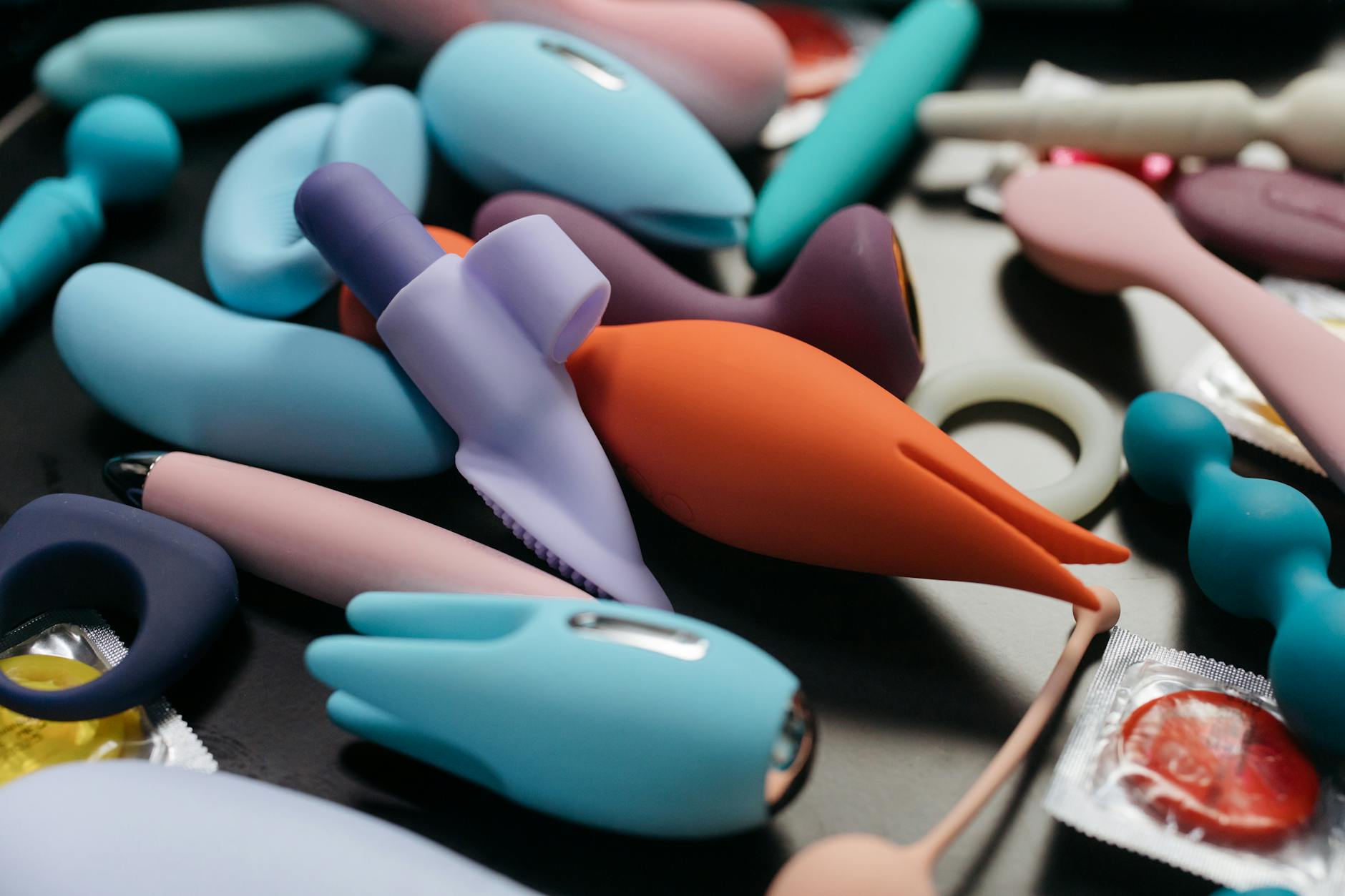
Let's be real about menopause and orgasms
Menopause changes your orgasm, but it doesn't end it. This is the distinction almost nobody makes, and it matters because it changes everything about how you approach pleasure during this phase of life.
Tissue thinning is real. Lubrication decreases. The pelvic floor loses elasticity. But here's what stays intact: the neural pathways that fire when you come, the clitoral nerve density, the brain's absolute ability to experience intense pleasure. Many women report their strongest, most reliable orgasms happen after menopause, not before. This isn't inspirational nonsense. This is what I see in my practice repeatedly.
The reason lemon clitoral vibrators work so well during menopause is deceptively simple. They deliver targeted suction and pattern stimulation without the friction that can feel rough on thinner, drier tissue. They're also designed to build sensation gradually, which matters when your body takes longer to warm up.
What hormonal shifts actually change about orgasm
Let's map the physiology first, because understanding it stops you from blaming yourself for something that's just biology.
Estrogen is the primary architect of vaginal and clitoral tissue thickness. When estrogen drops during menopause, tissue becomes thinner and more delicate. This doesn't mean it stops working. It means it responds differently. The clitoris doesn't shrink functionally. The nerve endings don't disappear. But the tissue around them becomes more sensitive to direct pressure and friction.
Vaginal lubrication also decreases because estrogen triggers the glands that produce it. Less lubrication means more friction during penetration, which can actually make external clitoral stimulation feel sharper and more intense. That's not always bad, but many women find it uncomfortable without additional support.
The pelvic floor muscles lose tone and elasticity, which can make orgasms feel differently shaped. Some women describe pre-menopause orgasms as full-body waves. Post-menopause, they might feel more concentrated in one area, or they might feel even more intense because the sensation is localized. Both versions are normal. Both versions can be deeply satisfying.
There's also a neurological piece. The brain's response to pleasure doesn't decline with menopause. If anything, many women find that mental clarity (fewer hormone fluctuations, fewer distracting thoughts about fertility) actually improves their orgasmic response.
Why suction feels different and better during menopause
Lemon clitoral vibrators use suction technology, which is mechanically different from traditional vibration. Instead of friction against tissue, suction creates gentle pressure changes that stimulate the entire clitoral complex, including the internal bulbs that extend into the body.
For menopausal bodies, this matters for three reasons.
First, suction doesn't require the same level of tissue thickness to feel good. Thinned tissue still has nerve endings. A suction device stimulates those nerves without the abrasive quality of direct vibration on delicate skin.
Second, suction allows for gradual intensity increases. With a lemon vibrator like the Lem, you can start on pattern one at low intensity and build slowly, giving your body time to warm up and engorge with blood. This mimics the slower arousal timeline that's common during menopause without feeling like a limitation. You're not broken. You're just on a different rhythm.
Third, the suction sensation often triggers a different kind of orgasm than vibration alone. Women frequently describe it as deeper, more full-bodied, or more centered in the internal clitoral structure rather than just the visible external part. During menopause, when sensation can feel more internal anyway, this shift often feels more natural and satisfying.
How to use a lemon vibrator specifically for menopausal pleasure
The mechanics of using a lemon clitoral vibrator during menopause aren't complicated, but the timing and approach matter.
Start with lubrication. Even if you don't think you need it, use a water-based lubricant. This isn't an admission that something's wrong. It's reducing friction and increasing sensation. Warm the lube slightly between your fingers or use body heat. Cold lube is jarring.
Begin at the lowest intensity. Place the Lem at a gentle angle against your clitoris and activate pattern one. You're not looking for immediate sensation. You're looking for comfort and the slow build of arousal. Spend 2-3 minutes here, letting your body recognize the sensation.
Pay attention to positioning. During menopause, you might find that the angle matters more than it did before. The clitoris can shift slightly in position, and the sensitive areas can change. Try the device at different angles. Most women find that slightly off-center or to one side of the clitoris works better than dead-center pressure.
Increase intensity gradually. After your body has warmed up (usually 3-5 minutes in), you can move to a higher pattern or increase intensity. The combination of pattern variation and intensity build often works better than just cranking intensity from the start.
Give your body more time. Orgasm during menopause often takes longer than it did before. This isn't a failure. This is your body asking for more sustained, focused attention. Most women find that 10-15 minutes of continuous stimulation feels more natural during menopause than the 5-7 minute timeline they might have had before.
Experiment with different patterns. The Lem offers multiple patterns. Some feel like vibration, others like rhythm, others like sustained pressure. Your preference might change based on your menstrual history or hormonal fluctuations. You don't have to find the "right" pattern. There's no right pattern. There's only what feels good today.
The pelvic floor conversation during menopause
Here's something most people don't talk about: pelvic floor tension often increases during menopause, even as the muscles lose elasticity. This sounds contradictory, but it's not. Tension and strength are different. You can have tight muscles that aren't strong.
When the pelvic floor is tense, even a wonderful sensation can feel blocked or incomplete. You might reach orgasm but feel like you're not quite getting there fully. This is deeply frustrating and totally fixable.
Before using your lemon vibrator, try 30 seconds of conscious pelvic floor relaxation. Breathe in for four counts, then exhale slowly for four counts while actively relaxing the muscles around your vagina and anus. Think of releasing rather than squeezing. Do this 5-6 times. You'll notice the difference immediately.
During stimulation, if you feel tension building, pause. Breathe. Relax. Then resume. This creates a rhythm that actually helps with orgasm, because you're training your pelvic floor to release at the right moment.
Managing lubrication concerns (without judgment)
Dryness during menopause is incredibly common and also incredibly treatable. If water-based lubricant alone isn't enough, you have options.
Silicone-based lubricants last longer, but they can degrade silicone toys. Stick to water-based with your Lem to keep the device in good condition.
If vaginal dryness is severe (intercourse is painful, basic activities feel uncomfortable), this is worth discussing with your healthcare provider. Topical estrogen creams, vaginal moisturizers used regularly, or vaginal DHEA (prasterone) can address this at the tissue level. These treatments are safe, localized, and often transformative. Don't white-knuckle through this phase. Medical support exists.
For your lemon clitoral vibrator use, the lube situation is less critical because external clitoral stimulation doesn't require the same level of lubrication as penetration. You might find that even a small amount of water-based lube makes the experience noticeably better.
The mental piece that changes everything
Physiology isn't the whole story. During menopause, many women experience a shift in how they relate to their own pleasure. The reproductive urgency that might have been there before often lifts. The societal pressure to look or perform a certain way softens.
This creates space for something that's rarely discussed: pleasure exploration as a form of genuine self-discovery. You get to ask what feels good to you now, not what you think should feel good or what felt good five years ago.
When you use a lemon vibrator during this phase, you're not trying to recreate pre-menopause pleasure. You're discovering what your current body actually wants. Sometimes that's surprising. Sometimes it's liberating. Often it's both.
FAQs about lemon vibrators and menopausal orgasms
Does menopause make it harder to orgasm with a vibrator?
Menopause changes the timeline and sometimes the sensation, but it doesn't make orgasm harder. Your orgasmic capacity is intact. You might need more time, more consistent stimulation, or different pressure angles. Using a lemon sucker like the Lem often makes the process easier because you're working with your body's actual response patterns rather than against them.
Can I use a lemon clitoral vibrator if I have vaginal atrophy?
Absolutely. Vaginal atrophy (tissue thinning) is external clitoral tissue is usually fine. Because lemon clitoral vibrators use suction rather than harsh friction, they're often gentler and more comfortable than other vibrators during this phase. If penetrative stimulation is uncomfortable, external clitoral focus is usually the right move anyway.
How long should a menopausal orgasm take with a lemon vibrator?
There's no timer. Most women find that menopause orgasms take 10-20 minutes from start to finish, but this varies wildly based on stress, hormonal fluctuations, and how much time you're giving yourself. The Lem is designed for sustained, pattern-based stimulation, which actually fits menopause timelines perfectly. You're not looking for speed. You're looking for consistency.
Does the Lem work if you're on HRT?
Yes. HRT (hormone replacement therapy) can change how you experience sensation, but it doesn't make vibrators less effective. Some women find that HRT actually makes sensation clearer and orgasm easier. Others find it takes time to recalibrate. Either way, a lemon clitoral vibrator is a useful tool during HRT use.
What if menopause has killed my libido entirely?
Low libido during menopause is real and often multifactorial. Sleep deprivation, hot flashes, relationship changes, and other life stressors all contribute. A vibrator alone won't fix this, but using one can help you understand what your body is actually capable of when the conditions are right. That information is powerful. If libido has completely disappeared, consider talking to your doctor about whether hormonal factors or other health issues are at play. Check out <a href="/blog/how-to-use-lemon-vibrator-for-better-results-when-you-have-a-low-sex-drive">how to use a lemon vibrator when you're dealing with low libido</a> for deeper strategies.
Is it normal for orgasms to feel different during menopause?
Completely normal. Orgasm shape, duration, and sensation all can shift during menopause. Different doesn't mean worse. Many women describe post-menopause orgasms as more intense, more localized, or more satisfying because they're happening in a body that's finally at rest (no more hormonal cycling, no more fertility pressure). This is a feature, not a bug.
What comes next
Menopause is not the end of your sexual life. It's the middle chapter, and the research and the lived experience of thousands of women suggests it's often the richest one. Your body is changing, yes. Your pleasure potential is intact. More than intact. It's right there, waiting for you to explore it with the right tools and the right information.
If you're navigating menopause alongside a partner, the most important step is having separate conversations. "My body is responding differently" is a different topic than "I want us to reconnect." Keeping those conversations distinct means both get the attention they deserve. Interested in more about partnered pleasure during transitions? Read <a href="/blog/how-to-use-lemon-vibrator-for-better-results-with-a-female-partner">how to use a lemon vibrator for better results with a partner</a>.
Your pleasure matters. Your orgasm matters. And the fact that menopause changed your body's timeline or sensation doesn't change either of those things. It just changes the path. Which is often better than the original.