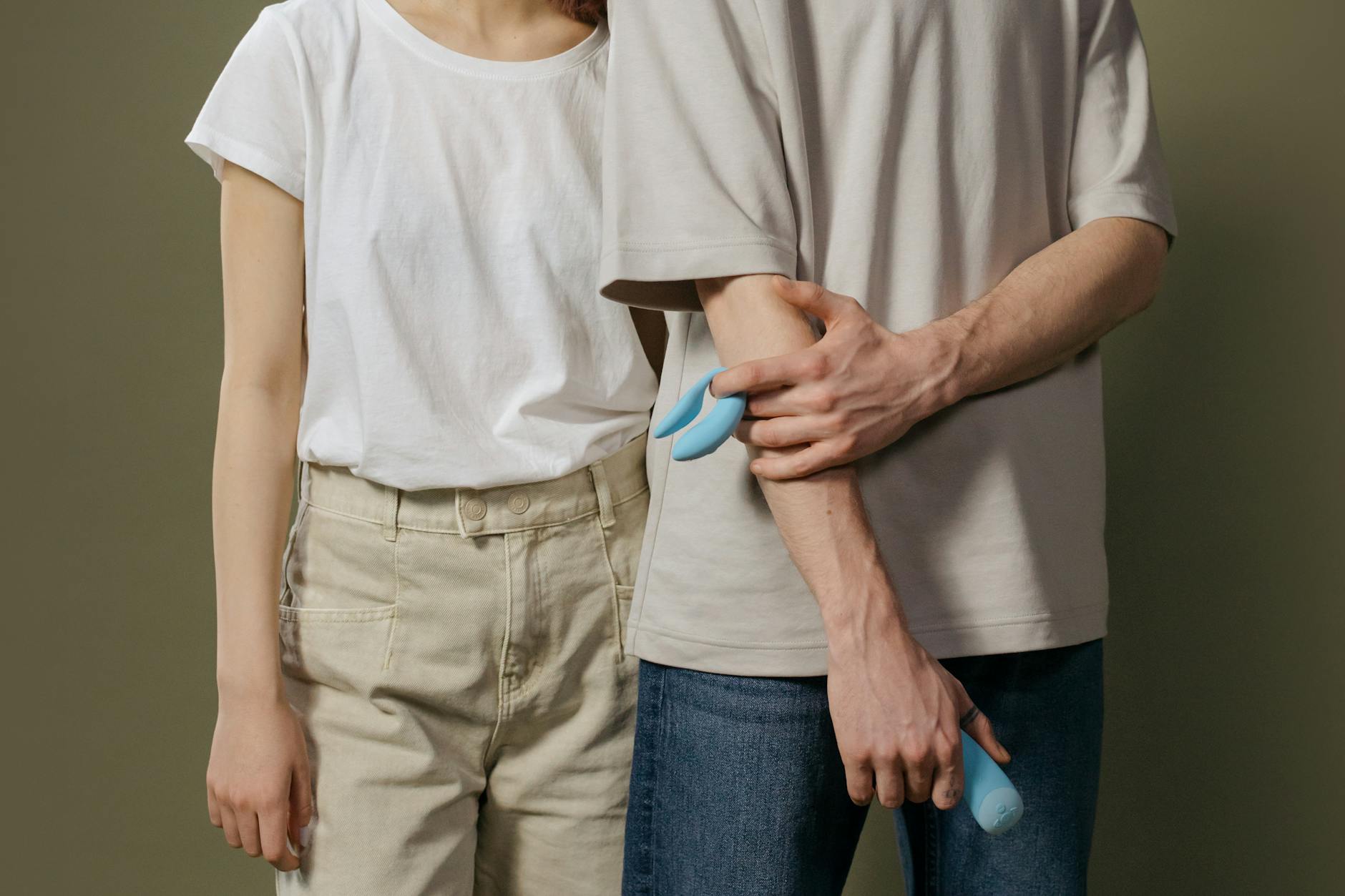
The disconnect nobody talks about
Let's be real. When a relationship has gone quiet, sex doesn't just disappear overnight. It gets replaced by something worse: obligation masquerading as intimacy. You go through the motions. Your partner feels it. You feel it. And after a while, pleasure stops being something you expect and starts being something you actively avoid.
The physical body follows the emotional body. If you're not feeling seen or valued, your nervous system isn't going to light up for sex. That's not a flaw. That's biology protecting you.
Why desire dies when connection does
When emotional distance grows, your brain does something counterintuitive. It doesn't just reduce desire. It actively dampens your physical capacity to feel arousal. Cortisol (your stress hormone) rises. Oxytocin (your bonding hormone) drops. The neural pathways that wire pleasure to trust get rewired into hesitation.
You might feel touch and not feel anything. You might want to want sex and find yourself completely numb. This isn't frigidity or low libido in the clinical sense. This is your body saying, "I don't feel safe enough to surrender here."
The good news? You can rewire it. But the path back to partner sex almost always goes through solo pleasure first.
Solo pleasure is the reset button
Here's what happens when you give yourself permission to explore pleasure alone, without performance pressure or your partner's expectations in the room: your nervous system starts to trust sensation again. You remember what arousal actually feels like. You find the specific touches that make your body respond. And crucially, you remember that pleasure is yours to claim.
That reclamation is essential. Because in a disconnected relationship, sex often becomes a tool for managing your partner's feelings rather than a source of your own. Solo exploration short-circuits that dynamic. It puts you back in your own body first.
Why lemon vibrators specifically help here
Clitoral vibrators, particularly suction-based designs like the Lem, work beautifully for reconnection because they don't require the mental engagement that partnered sex does. You don't have to wonder what your partner is thinking or whether you're taking too long. You don't have to coordinate breathing or match their pace. You can drop into pure sensation without managing anyone else's experience.
The suction pattern of a lemon clitoral vibrator stimulates in a way that feels fundamentally different from friction. It's gentler on numbed tissue and often bypasses the anxiety that can come with direct touch. Many people who have felt disconnected from their pleasure find that air-suction stimulation is the entry point back into feeling anything at all.
How to restart your pleasure practice
The practical steps are simpler than the emotional work, but both matter.
Start solo, full stop. This isn't about deprivation or punishment. It's about reestablishing your own baseline. Give yourself at least two to three weeks of solo exploration before reintroducing partner sex. You need that time to remember what turns you on without external pressure.
Set a specific window. Disconnected couples often have sex at random times when they both happen to be free and slightly drunk. That randomness actually works against reconnection. Instead, choose a specific time each week when you can be alone with your body for 20-30 minutes. Consistency rewires your nervous system faster than spontaneity.
Use your lemon vibrator as a permission structure. The physical act of pulling it out says to your brain, "This time is for me." That permission is harder to give yourself than it sounds. The tool becomes a ritual that signals safety.
Go slow. Pattern 1 or 2 on your clitoral vibrator. Spend the first 5-10 minutes just feeling it without pushing toward orgasm. Let your body remember what arousal tastes like before you chase climax.
When to reintroduce partnered sex
You'll know you're ready when pleasure feels less like a negotiation with your body and more like something you're actually looking forward to. That's not a philosophical point. That's a practical signal that your nervous system has downshifted from threat mode.
When you do restart partnered sex, here's the thing that changes: you've just spent weeks remembering that pleasure is your birthright, not a performance metric. That knowledge is incredibly grounding. It shifts the dynamic away from "Can I do this for my partner?" and toward "What do I actually want here?"
Many couples find that introducing a shared lemon vibrator into partner sex after reconnection work is game-changing. It's not about needing an external tool. It's about the statement that tool makes: "Your pleasure matters enough to us that we're going to prioritize it explicitly."
The emotional work underneath
Here's where I have to be honest as a relationship coach. A lemon clitoral vibrator can help you reconnect with your body. It cannot fix a relationship that's fundamentally broken or a partner who's unwilling to do their own work. If the disconnection stems from betrayal, ongoing conflict, or misalignment about what you both want, the vibrator is a tool for your personal healing, not a couple's therapy substitute.
But for relationships that are stuck in disconnection without a major trauma or betrayal, solo pleasure work plus honest conversation can shift everything. You get your body back. You remember desire. And often, that remembering creates space for your partner to remember you as a full person again, not just a coexisting body they've stopped trying to touch.
The bigger picture
Rebuilding pleasure after emotional distance is not fast. It's not something you do once and declare fixed. It's a practice that says, "I deserve to feel good in my own body, and I'm going to prioritize that." Some weeks you'll skip it. Some weeks you'll do it religiously. And gradually, the relationship to both pleasure and partner will shift.
Your body is smarter than you think. It knows when you're connected and when you're not. A lemon vibrator isn't magic, but it is permission. Permission to feel again. Permission to ask for what you want. Permission to believe that your pleasure matters.
That permission, it turns out, is where most reconnections actually begin.
People also ask
Can using a vibrator alone damage a relationship if my partner doesn't know?
Not inherently. But prolonged secrecy often does. If you're hiding solo pleasure because you fear judgment, that's worth examining. A partner worth staying with will understand that your pleasure is part of your wellbeing. That said, eventually, conversations help. When the relationship is reconnected enough, bringing your partner into the practice often deepens intimacy rather than threatens it.
How long does it take to feel desire again after relationship disconnection?
It varies wildly. For some people, two to three weeks of solo pleasure work shifts their nervous system noticeably. For others, it takes months, especially if the disconnection ran deep. The timeline also depends on whether the underlying relationship issues are being addressed in parallel. A vibrator can rewire your body's capacity for pleasure, but it can't fix ongoing conflict.
Should I tell my partner I'm using a lemon vibrator to rebuild our intimacy?
That depends on your relationship's communication baseline. Some couples are ready to talk about it openly and find it brings them closer. Others need the reconnection to happen first, then the conversation can follow. There's no universal right answer. But complete, ongoing secrecy often signals that deeper trust work is needed between you both.
What if solo pleasure practice doesn't help me reconnect with desire?
Then disconnection might run deeper than temporary emotional distance. Depression, trauma, medication side effects, or fundamental misalignment with your partner can all suppress desire independently of relationship work. That's when talking to a therapist or a doctor becomes essential. A clitoral vibrator is a tool for reconnection when the disconnection is relational, not when it's medical or psychological.
Can a lemon sucker vibrator feel less intense if I'm numb from emotional distance?
Actually, the opposite. Air-suction clitoral vibrators like the Lem often feel more accessible when you're in a numb state because they don't require the same nerve sensitivity that friction-based vibrators do. That's part of why they're so effective for reconnection. If suction feels too strong initially, starting at the lowest pattern helps your nervous system acclimate gradually.
How do I bring this up with my partner if we've stopped talking about sex?
Start with the emotional truth, not the tool. "I miss feeling close to you" is different than "I bought a vibrator." The conversation opens with vulnerability, not logistics. Once that's on the table, the practical aspects feel less risky. And weirdly, admitting you're struggling to feel pleasure often invites your partner to admit they're struggling too.
Moving forward
Reconnection isn't linear. Some weeks you'll use your lemon vibrator and feel everything. Other weeks, nothing clicks. That variance is normal. What matters is the commitment to your own pleasure as a non-negotiable part of rebuilding intimacy, whether that's with your partner or just with yourself.
If you're navigating this territory and feeling stuck, that's also valid. Reach out. Sometimes the path forward requires outside support, and there's no shame in that.
Your pleasure deserves to be rebuilt. Your body deserves to be trusted again. Start there, and often, the rest follows.